
Critical Thinking in a BANI World for Modern Boards
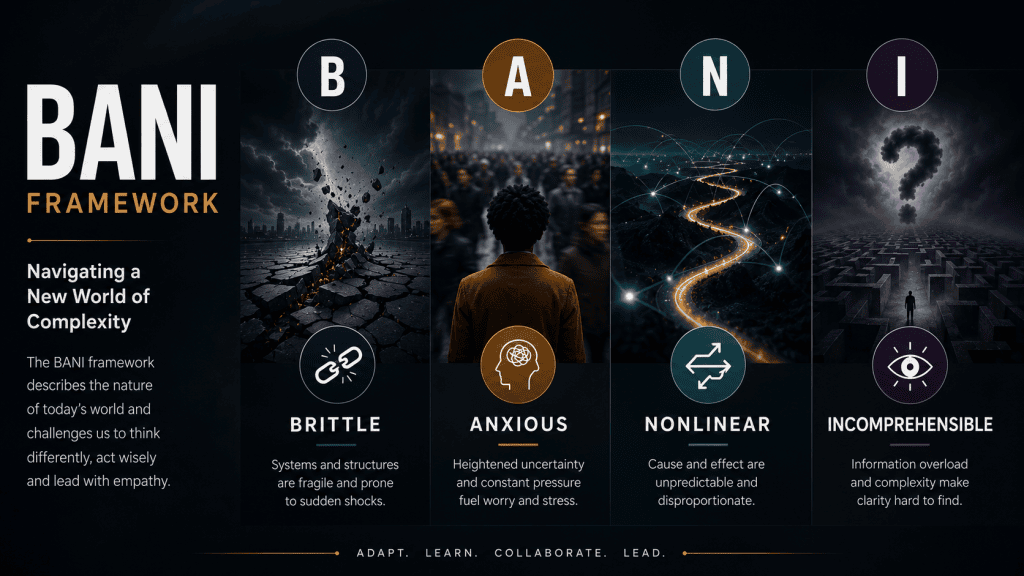
Corporate governance is operating in a world that is increasingly Brittle, Anxious, Nonlinear and Incomprehensible (BANI), where traditional assumptions of stability and predictability no longer hold. This article explores why critical thinking has become an essential governance responsibility, requiring boards to challenge assumptions, interrogate information, anticipate interconnected risks, and make sound decisions amid uncertainty. From cybersecurity and climate risk to stakeholder distrust, AI, ESG and information overload, effective governance now depends on more than compliance and technical expertise. The strongest boards will be those willing to ask difficult questions, embrace constructive challenge, and think critically before a crisis forces them to do so.
Assessing the Principle of Directorial Oversight and Accountability Through the Lens of Re Barings plc (No 5) and Its Relevance to Kenyan Corporate Governance

The collapse of Barings Bank in 1995 remains one of the most significant corporate failures in modern financial history. While the immediate cause of the collapse was the unauthorized derivatives trading conducted by Nick Leeson, the legal significance of Re Barings plc (No 5) lies not in the misconduct of a rogue trader but in the failures of corporate governance that enabled such misconduct to persist undetected. The decision established an important principle of company law and corporate governance that directors may delegate functions, but they cannot delegate responsibility. The case therefore stands as a leading authority on the principle of directorial oversight and accountability.
The True Test of Leadership is in Crisis.

In an interconnected global environment, crisis is no longer confined by borders, and rare events can quickly escalate into governance failures for organisations that are unprepared. While adversity cannot be predicted, strong governance, scenario planning, and disciplined leadership ensure organisations remain agile, decisive, and resilient when crisis strikes.
Strategies for the Insurance Industry in Embracing Digital Transformation

Article by Prof. Kenneth Wyne Mutuma, Michelle Chebet, and Wachilonga Namasaka The world is constantly evolving, with disruptions such as economic fluctuations, pandemics, and climate change reshaping how individuals and businesses manage risks. In this dynamic environment, effective risk management has never been more crucial. The insurance industry plays a vital role in providing financial […]
Strengthening Governance in Kenya’s Tea sector

Article by Wachilonga Namasaka Tea has long been at the heartbeat of Kenya’s agriculture landscape. Visitors in Kenya are more likely to be welcomed by a steaming cup of tea as a gesture of hospitality found in homes and offices alike. Recognizing this significance of tea in the country, Executive order No. 3 of 2021 on Agricultural reforms: Revitalization of the […]
Driving Sustainable Change: The Role of ESG Frameworks in Shaping Kenya’s Corporate Responsibility and Future

Article by Tyneketra Wanja We do not inherit the earth from our ancestors, we borrow it from our children – American Proverb Today, there is an increase in sustainability awareness among consumers as they choose to purchase products from companies that are looking into sustainable brands. With consumers demanding more than the usual financial reporting […]
Effective Delegation by the Board and Senior Management: From Control to Empowerment

by Kenneth Wyne Mutuma, PhD and Chelsea Rotich Recent trends in corporate governance have revealed that effective leadership for high productivity is highly reliant on delegating roles and empowering employees and/or subordinates rather than controlling their day-to-day activities. Control is a notion that describes leading and supervising individuals involved in carrying out an activity. In […]
Principles of Corporate Governance: Reporting and Disclosures

by Kenneth Wyne Mutuma, PhD and Dunstan Ondieki The Organization for Economic Cooperation and Development (OECD) defines corporate governance principles as the non-binding key pillars or building blocks of sound corporate governance intended to help policy makers evaluate and improve corporate governance’s legal, regulatory, and institutional framework. The rationale underlying the principles of corporate governance […]