Critical Thinking in a BANI World for Modern Boards
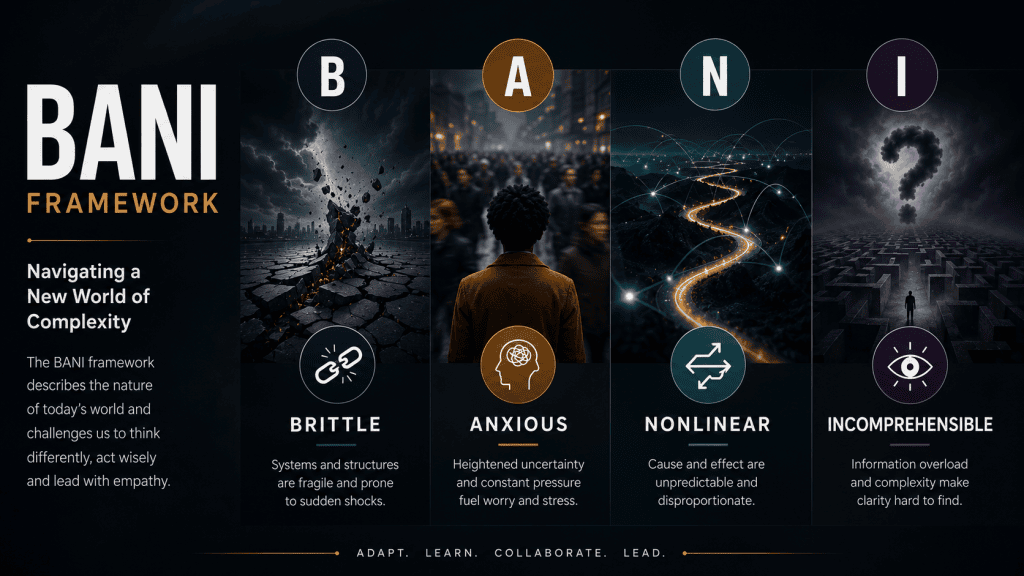
Corporate governance is operating in a world that is increasingly Brittle, Anxious, Nonlinear and Incomprehensible (BANI), where traditional assumptions of stability and predictability no longer hold. This article explores why critical thinking has become an essential governance responsibility, requiring boards to challenge assumptions, interrogate information, anticipate interconnected risks, and make sound decisions amid uncertainty. From cybersecurity and climate risk to stakeholder distrust, AI, ESG and information overload, effective governance now depends on more than compliance and technical expertise. The strongest boards will be those willing to ask difficult questions, embrace constructive challenge, and think critically before a crisis forces them to do so.
Why Ethics, Independence, and Accountability Matter More Than Ever

Article by Tyneketra Wanja Public trust is the invisible capital that determines whether organizations thrive, survive, or fade into irrelevance. In an era defined by heightened scrutiny and instant accountability, entities are judged not only by the profits they generate but also by the integrity they demonstrate and the value they create. Stakeholders are looking […]
Assessing the Principle of Directorial Oversight and Accountability Through the Lens of Re Barings plc (No 5) and Its Relevance to Kenyan Corporate Governance

The collapse of Barings Bank in 1995 remains one of the most significant corporate failures in modern financial history. While the immediate cause of the collapse was the unauthorized derivatives trading conducted by Nick Leeson, the legal significance of Re Barings plc (No 5) lies not in the misconduct of a rogue trader but in the failures of corporate governance that enabled such misconduct to persist undetected. The decision established an important principle of company law and corporate governance that directors may delegate functions, but they cannot delegate responsibility. The case therefore stands as a leading authority on the principle of directorial oversight and accountability.
The New Era of Government-Owned Enterprises in Kenya: Governance Reform and the Expanding Role of Certified Secretaries

Kenya has entered a defining moment in the governance of its public commercial institutions with the enactment of the Government Owned Enterprises Act. The Act represents one of the most significant structural reforms in the management of state-owned commercial entities in recent history. The Act presents a governance reset. It shifts Government-Owned Enterprises (GOEs) from traditional bureaucratic state corporation models into commercially prudent public companies governed under the Companies Act.
People Over Profit: Why the Social Pillar of ESG Determines Long-Term Sustainability

Sustainability is often discussed in terms of profits, carbon footprints, and compliance metrics. Yet, at its core, sustainability is about people. The social aspect of Environmental, Social and Governance (ESG) frameworks and the people dimension of the Triple Bottom Line, remains the most decisive factor in determining whether organizations endure uncertainty, crises and change. For companies, organizations and state corporations alike, people are not just stakeholders; they are the system itself. Employees, customers, suppliers, communities, regulators and shareholders form an interconnected web where trust, once broken, creates ripple effects that can outlast any financial loss.
THE INDISPENSABILITY OF BOARD EVALUATION FOR SUSTAINABLE CORPORATE GOVERNANCE

Board evaluation is essential to sustainable corporate governance because it ensures that boards remain effective, accountable, and responsive to changing institutional and stakeholder demands. Many governance failures do not occur suddenly but develop over time when boards become passive, fail to question management or lose clarity in their oversight role. Board evaluation comes in handy to provide a structured way to assess how well boards perform their duties, clarify the boundary between governance and management and identify areas for improvement. By promoting reflection, accountability, and continuous improvement, board evaluation strengthens decision-making, builds stakeholder trust and supports the long-term stability and resilience of institutions.
Strategic Meeting Planning and Governance Framework

In many organizations, meetings have become synonymous with wasted time marked by endless discussions, recurring issues, and minimal progress.
Strategies for the Insurance Industry in Embracing Digital Transformation

Article by Prof. Kenneth Wyne Mutuma, Michelle Chebet, and Wachilonga Namasaka The world is constantly evolving, with disruptions such as economic fluctuations, pandemics, and climate change reshaping how individuals and businesses manage risks. In this dynamic environment, effective risk management has never been more crucial. The insurance industry plays a vital role in providing financial […]
Strengthening Governance in Kenya’s Tea sector

Article by Wachilonga Namasaka Tea has long been at the heartbeat of Kenya’s agriculture landscape. Visitors in Kenya are more likely to be welcomed by a steaming cup of tea as a gesture of hospitality found in homes and offices alike. Recognizing this significance of tea in the country, Executive order No. 3 of 2021 on Agricultural reforms: Revitalization of the […]
Driving Sustainable Change: The Role of ESG Frameworks in Shaping Kenya’s Corporate Responsibility and Future

Article by Tyneketra Wanja We do not inherit the earth from our ancestors, we borrow it from our children – American Proverb Today, there is an increase in sustainability awareness among consumers as they choose to purchase products from companies that are looking into sustainable brands. With consumers demanding more than the usual financial reporting […]
AI IN ADDRESSING CHALLENGES IN CORPORATE GOVERNANCE

AI is revolutionizing corporate governance by enhancing transparency and efficiency. By analyzing vast amounts of data in real-time, AI can proactively identify potential issues and streamline compliance processes, reducing human error. Additionally, AI-driven insights into stakeholder sentiment foster better engagement and trust, paving the way for more effective governance practices.
OVERVIEW OF CORPORATE GOVERNANCE PRINCIPLES AND ETHICAL STANDARDS UNDER MWONGOZO CODE
Article by Prof. Ken Wyne Mutuma Corporate governance is a set of rules, practices, and processes that guides the conduct of persons in a company or an organization. It is the technique by which companies are directed and managed. The Mwongozo Code of Governance for State Corporations was introduced in 2015 by the Government of […]